
Minnesota Contractor Alert: Enforcement Actions and Tightening Standards for Asbestos and Lead
Recent MPCA enforcement actions and state rulemaking highlight the growing compliance responsibilities contractors face when disturbing asbestos and lead across Minnesota.
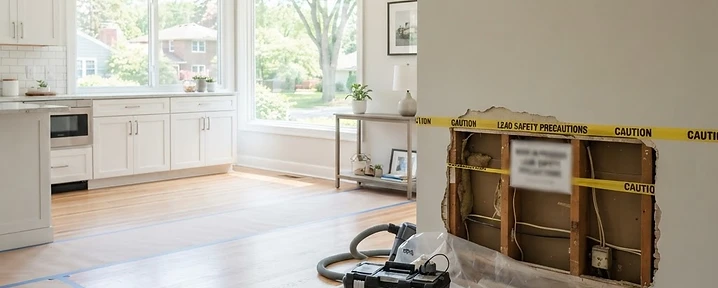
For general contractors and specialty trades across the Upper Midwest, regulatory compliance on job sites is evolving rapidly. State regulators are tightening scrutiny on hazardous materials handling, underscored by both significant penalties for non-compliance and active rulemaking intended to adopt stricter federal thresholds.
According to an enforcement release from the Minnesota Pollution Control Agency (MPCA), a Saint Paul-based construction firm was fined $17,938 following the unnotified demolition of a property in Mahtomedi that contained asbestos. The agency determined that the contractor failed to submit the mandatory 10-day advance notification prior to demolition, lacked a trained individual on-site to monitor asbestos removal, and failed to transport asbestos-containing demolition debris to a state-permitted disposal facility.
At the same time, the Minnesota Department of Health (MDH) is updating Minnesota Rules Chapter 4761 to align with lowered federal dust-lead hazard standards and clearance thresholds, alongside drafting permanent rules to authorize state-level enforcement of the EPA Renovation, Repair, and Painting (RRP) program. Together, these developments signal a clear message for trades: pre-construction assessment, proper documentation, and verified waste handling are essential steps on every project.
The Real Cost of Non-Compliance
Penalties for bypassing environmental safety regulations go beyond municipal stop-work orders. In Minnesota, the MPCA calculates administrative fines based on environmental impact and seeks to recover any economic benefit gained by evading compliance.
For a contractor, skipping notification or cutting corners on hazard assessments often leads to:
- Unexpected Fines: Regulatory citations frequently reach five figures.
- Compounded Project Delays: Discovering unmanaged asbestos or lead during an active teardown brings jobs to an immediate halt.
- Disposal Complications: Contaminating general construction and demolition (C&D) debris with regulated asbestos-containing material (RACM) forces entire waste loads to be treated as hazardous, multiplying disposal expenses.
- Reputational Exposure: Regulatory enforcement actions are public records accessible to clients, developers, and municipalities.
Key Rules Every Contractor Must Factor Into Project Schedules
Navigating pre-renovation and pre-demolition protocols requires integrating state and federal checkpoints directly into your estimating and pre-con workflows:
- The 10-Day Demolition Notification: Under state rules implementing the National Emission Standards for Hazardous Air Pollutants (NESHAP), the MPCA requires written notification at least 10 working days before commencing demolition of any regulated facility, regardless of whether asbestos is presumed present or absent.
- Comprehensive Pre-Demolition Surveys: A walk-through visual inspection is not enough. Regulators require an asbestos inspection conducted by a state-certified building inspector before structural or mechanical materials are impacted.
- Evolving Dust-Lead Clearance Levels: As MDH aligns state rules with federal directives, post-renovation and post-abatement clearance levels are dropping significantly—down to 5 µg/ft² on floors and 40 µg/ft² on window sills. Trade contractors disturbing painted surfaces in pre-1978 housing must ensure containment, HEPA-assisted cleanup, and verifiable clearance protocols are in place.
- Chain-of-Custody Manifests: Hazardous materials must travel with certified waste manifests and be deposited exclusively at landfills permitted to accept non-friable or friable asbestos debris.
Proactive Steps for Trade and General Contractors
Protecting project margins, schedules, and worker safety starts long before crews arrive on-site with sledgehammers:
- Verify Facility Age and History: Never rely on assumptions or past disclosures. Request documented inspection reports from property owners during the bidding phase.
- Engage Third-Party Testing Early: Maintain clear separation of duties by bringing in an independent, certified inspection firm to sample suspects (such as flooring adhesives, pipe wrap, textured coatings, and old paints) prior to establishing contract scopes.
- Build Buffer Into Demolition Timelines: Account for the mandatory 10-day notification window on the master schedule to avoid crew downtime.
- Train Subcontractors on Stop-Work Triggers: If hidden materials like vermiculite or thermal system insulation are uncovered behind drywall, ensure field supervisors pause work and call for immediate testing.
How SAFE Supports Project Compliance
Solutions for Asbestos Free Environments (SAFE) works alongside general and trade contractors across Minnesota, with a strong focus throughout the Twin Cities metro. We provide certified inspections, transparent testing, and licensed abatement services designed to keep projects code-compliant, timelines intact, and workers protected from hazardous exposure.
We use Google AdSense to show ads on selected educational articles. Advertising cookies help us keep this content free. You can change this choice anytime.
Comments
(0)Join the conversation
Members can comment on articles. Create a free account to share your thoughts.
Create free accountNo comments yet. Be the first to share your thoughts.