
Minnesota Contractor Compliance: Lessons from MPCA Asbestos Enforcement and Evolving Lead Rules
A recent $17,938 MPCA fine in Mahtomedi underscores the costly risks of improper asbestos handling, while Minnesota moves toward state-level lead RRP enforcement and stricter dust clearance standards.
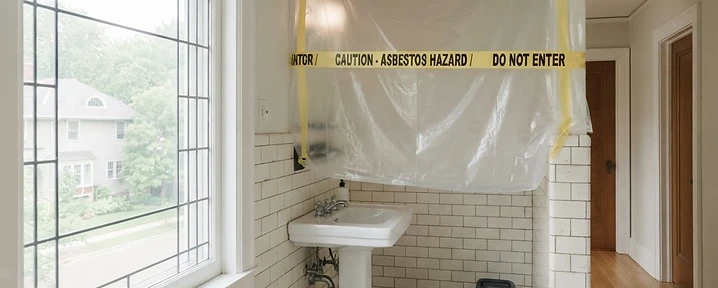
For general contractors, trade crews, and demolition specialists, managing legacy building materials is a regular part of operating in the Upper Midwest. However, oversight and enforcement around hazardous materials remain active across Minnesota, and missteps can quickly jeopardize job timelines, crew safety, and project budgets.
A recent enforcement action by the Minnesota Pollution Control Agency (MPCA) serves as a timely reminder. The MPCA penalized a Saint Paul-based construction company $17,938 after investigating the demolition of an asbestos-containing structure in Mahtomedi. The violations cited were straightforward but severe: failing to notify the MPCA at least 10 days prior to demolishing a property containing asbestos, failing to have a trained individual on site to monitor asbestos removal, and failing to transport demolition debris to an authorized disposal facility.
At the same time, the Minnesota Department of Health (MDH) is advancing rulemaking to assume direct state authorization of the federal Lead Renovation, Repair, and Paint (RRP) program, alongside updates to residential lead abatement standards. For contractors, staying ahead of these environmental compliance requirements is essential before swinging a sledgehammer.
The Pre-Demolition Asbestos Checklist
Many project managers assume that standard residential remodels or selective teardowns are exempt from environmental scrutiny. In Minnesota, state and federal National Emission Standards for Hazardous Air Pollutants (NESHAP) regulations impose clear obligations on property owners and prime contractors.
To keep projects compliant and protect site crews:
- Conduct a certified hazardous material survey: Visual inspections by non-certified personnel are not sufficient. An accredited inspector must sample suspect materials—such as pipe insulation, acoustic plaster, floor tiles, mastic, window caulking, and transite siding—before structural disturbance begins.
- Respect the 10-day notification rule: If regulated asbestos-containing material is present, or if an entire structure is being demolished (even if no asbestos is identified), notification must be submitted to the MPCA at least 10 working days prior to starting demolition or abatement activities.
- Ensure qualified site supervision: State rules require trained and certified individuals to oversee handling and removal, verifying that containment, wet methods, and negative-air controls are functioning properly.
- Document waste manifests and chain-of-custody: Regulated asbestos waste cannot simply go into a standard construction and demolition dumpster. It must be wetted, sealed in leak-tight containers, labeled, and hauled to an MPCA-permitted landfill authorized to accept industrial asbestos waste.
Shifting Lead Paint Standards: What Trades Need to Track
While asbestos notifications remain an active enforcement priority, lead safety standards are also undergoing regulatory shifts. Currently, contractors in Minnesota disturbing lead-based paint in pre-1978 homes or child-occupied facilities must follow EPA RRP requirements. However, MDH's ongoing RRP rulemaking will transition oversight directly to the state, introducing state-specific training, certification, and on-site work plan protocols.
Additionally, following updated federal EPA guidance, MDH is adjusting its residential lead abatement dust-lead clearance levels (DLCL) down to significantly lower thresholds: 5 µg/ft² for floors and 40 µg/ft² for interior window sills. Trade contractors performing work where containment and post-renovation cleaning verification are required should expect tighter verification margins on finished surfaces.
Practical Steps Before Starting Your Next Project
Avoiding stop-work orders, administrative penalties, and worker exposure comes down to standardizing your pre-construction workflow:
- Build testing into the bidding phase: Factor the cost and timeline of hazardous material inspections and potential abatement into preliminary bids so clients are prepared for realistic schedules.
- Check the age of the structure: Any structure built prior to the late 1970s carries an elevated likelihood of both asbestos and lead paint, though asbestos can still be encountered in certain modern materials.
- Isolate workspaces early: Maintain poly containment, HEPA filtration, and strict access controls whenever opening suspect walls, removing mechanical chases, or scraping historic trim.
- Keep complete compliance binders: Maintain copies of all inspection reports, contractor licenses, worker certifications, and landfill receipts on site for municipal or state inspectors.
Reliable Compliance Support Across Minnesota
At SAFE (Solutions for Asbestos Free Environments), we work alongside general contractors, specialty trades, property managers, and developers to take the friction out of environmental regulations. Serving communities across Minnesota with a strong presence in the Twin Cities metro, our team delivers certified asbestos inspections, lead testing, and professional abatement services designed to keep your jobsites safe, compliant, and on schedule.
We use Google AdSense to show ads on selected educational articles. Advertising cookies help us keep this content free. You can change this choice anytime.
Comments
(0)Join the conversation
Members can comment on articles. Create a free account to share your thoughts.
Create free accountNo comments yet. Be the first to share your thoughts.