
Minnesota Lead and Asbestos Regulatory Updates: What Inspectors Need to Know Before the Next Project
With the Minnesota Department of Health advancing state-level RRP rulemaking and enforcing strict sampling standards, home and environmental inspectors must align their field protocols to stay compliant and protect clients.
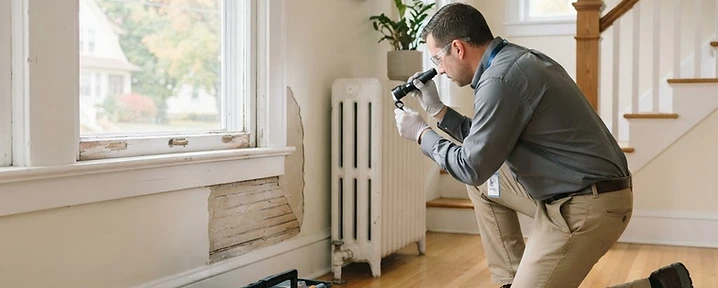
For home inspectors and environmental consultants across the Upper Midwest, regulatory clarity is the foundation of every safe transaction and renovation. In Minnesota, critical developments in lead paint and asbestos oversight are reshaping expectations for field assessments.
According to the Minnesota Department of Health (MDH) Asbestos and Lead Compliance Unit, the state continues active work toward establishing an authorized Minnesota Lead Renovation, Repair, and Painting (RRP) program. While general contractors and renovators monitor how state-level RRP oversight will align with existing federal EPA standards, inspectors evaluate the immediate downstream impact: heightened scrutiny over pre-renovation surveys, clear sampling documentation, and baseline hazard assessments.
Coupled with recent updates to Minnesota Administrative Rules Chapter 4761 regarding residential lead standards and completed revisions to residential abatement rules, inspectors must review standard operating procedures before stepping onto their next property.
Understanding Minnesota-Specific Lead Inspection Rules
General home inspections often flag deteriorated paint on older building stock, but formal lead evaluations carry rigorous statutory guidelines under Minnesota law.
According to Minnesota Administrative Rules Part 4761.2560, several explicit technical requirements govern residential lead inspections:
- Prohibited Field Methods: State rules explicitly prohibit the use of sodium rhodizonate and sodium sulfide chemical swab kits for determining the presence of lead-based paint during regulatory inspections. Professional determinations must rely on documented methodologies, such as calibrated X-ray fluorescence (XRF) analyzers or certified laboratory analysis.
- Comprehensive Component Testing: In residential properties, schools, and child-occupied facilities built prior to 1978, inspectors must evaluate each interior and exterior component with a distinct painting history, unless documentation confirms the component was replaced after 1978.
- Bare Soil Assessments: An inspection must visually identify bare soil locations unless snow cover prevents observation at the time of the site visit.
- Standardized Reporting: Inspectors and risk assessors are required to produce formal inspection reports containing specific regulatory disclosures within 30 days of completing field evaluations.
Additionally, statutory updates under Minnesota Statutes § 144.9504 highlighted by CDC Childhood Lead Poisoning Prevention reporting underscore how environmental investigators now address take-home lead and off-site migration. For environmental inspectors, identifying potential secondary exposure sources (such as work vehicles or hobbies) has become a key part of comprehensive hazard profiling.
Asbestos Inspection Protocols: Pre-Renovation and Real Estate Triggers
While MDH does not require an asbestos inspection simply to sell a standard single-family home, the Minnesota Department of Health Asbestos Inspection and Assessment guidance highlights that other regulatory bodies—including the EPA, the Minnesota Pollution Control Agency (MPCA), and Minnesota OSHA/DLI—strictly mandate inspections prior to any renovation or demolition activities.
When conducting or recommending an asbestos inspection, keep these considerations in mind:
- The 1% Threshold: Asbestos-containing material (ACM) is legally defined as any material containing more than 1% asbestos. Suspected materials must be assumed positive until polarized light microscopy (PLM) or other certified laboratory testing confirms otherwise.
- Inspector Credentials: If a formal inspection or assessment is conducted, Minnesota requires it to be performed by an MDH-certified asbestos inspector. Written reports must include the inspector’s certification number and signature.
- Clear Client Communication: Home buyers planning immediate renovations need to know that a standard general home inspection is visual and non-destructive. Advising clients to secure dedicated asbestos sampling before removing flooring, disturbing popcorn ceilings, or remodeling mechanical pipe insulation prevents accidental contamination and costly abatement stoppages.
Practical Field Checklist for Inspectors
To ensure your reporting remains defensible and informative without overstepping scope, integrate these best practices into your initial client consultations:
- Establish Age Baselines Early: In Minnesota’s older urban cores and vintage housing stock, assume structures built before 1978 carry a high probability of lead-based paint, and structures built before the 1980s carry potential ACM in floor tiles, mastics, thermal insulation, or joint compounds.
- Distinguish Visual Observations from Regulated Surveys: Clearly distinguish between an observational home inspection report and a statutory hazard risk assessment. Provide explicit notes clarifying that non-invasive inspections cannot verify materials concealed inside wall cavities or beneath subflooring.
- Avoid Qualitative DIY Test Kits: Do not rely on over-the-counter chemical test swabs for professional reports, as state rules disqualify them for compliance purposes.
- Facilitate Independent Abatement Scoping: When significant hazard risks are documented, refer clients to licensed abatement contractors who can develop containment and work plans that adhere to MDH work practice standards.
Collaborative Environmental Safety in Minnesota
Navigating Minnesota’s environmental regulations requires precision, calibrated equipment, and up-to-date knowledge of evolving rules. SAFE (Solutions for Asbestos Free Environments) provides certified lead and asbestos inspection, risk assessment, and abatement solutions across Minnesota, maintaining an active, experienced presence throughout the Twin Cities metro area. Whether your clients require specialized sampling prior to closing or remediation planning ahead of construction, partnering with certified professionals ensures every project moves forward safely and in full compliance.
We use Google AdSense to show ads on selected educational articles. Advertising cookies help us keep this content free. You can change this choice anytime.
Comments
(0)Join the conversation
Members can comment on articles. Create a free account to share your thoughts.
Create free accountNo comments yet. Be the first to share your thoughts.