
Minnesota Lead & Asbestos Regulatory Updates: What General Contractors and Trades Need to Know
With Minnesota moving to adopt state-level Lead RRP regulations and MNOSHA tightening occupational lead thresholds, contractors must navigate evolving compliance standards before kicking off renovation projects.
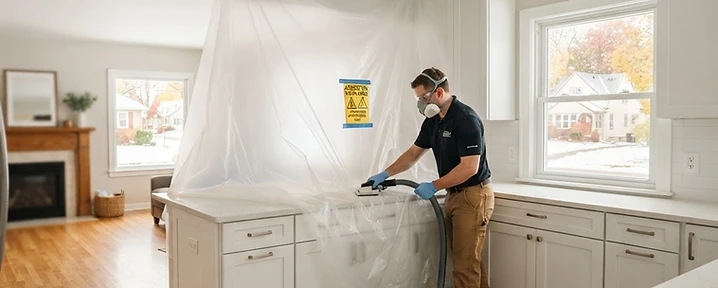
For general contractors, trade subcontractors, and project managers across Minnesota, the regulatory environment surrounding legacy building materials is undergoing meaningful shifts. Recent state-level administrative moves are set to place closer oversight on jobsite containment, worker exposure thresholds, and remediation workflows.
Two critical regulatory developments demand attention: the Minnesota Department of Health (MDH) advancing its own state-administered Lead Renovation, Repair, and Paint (RRP) program, alongside Minnesota OSHA (MNOSHA) drafting stricter occupational blood lead level (BLL) standards for construction and general industry.
Here is an objective look at these updates, paired with actionable steps your team should implement before breaking ground or bidding upcoming work.
Minnesota’s Evolving Lead Landscape: What’s Happening Now
1. MDH Lead RRP State Rulemaking
Historically, contractors in Minnesota working on target pre-1978 residential properties and child-occupied facilities have operated under federal EPA RRP enforcement. However, MDH is actively finalizing its transition toward state authorization of RRP rules. Recent rulemaking sessions and state-published crosswalk analyses highlight stricter alignment with Minnesota-specific administrative statutes.
For contractors, an MDH-authorized RRP framework means:
- Localized compliance oversight and state audits.
- Strict enforcement of on-site work plans and recordkeeping.
- Direct integration with Minnesota’s existing building permit requirements (such as Minn. Stat. § 326B.106, requiring proof of RRP certification prior to permit issuance).
2. MNOSHA Construction Standard Revisions
Following directives from the Minnesota Legislature, MNOSHA has moved forward with draft rulemaking revising 29 C.F.R. § 1926.62 (Lead in Construction). The proposed revisions lower the medical removal protection (MRP) triggers—reducing the blood lead level at which an employee must be temporarily removed from lead-exposure tasks, as well as lowering the return-to-work threshold. Trade contractors disturbing painted surfaces or handling mechanical torch-cutting and demolition will face tighter surveillance requirements and lower exposure allowances.
3. Federal Asbestos Scrutiny
Concurrently, federal scrutiny over asbestos remains high. While EPA finalized significant bans on ongoing chrysotile asbestos uses in 2024 and completed expanded risk evaluations on legacy uses, standard NESHAP (National Emission Standards for Hazardous Air Pollutants) mandates continue to hold commercial general contractors strictly liable for pre-demolition and pre-renovation surveys regardless of a building’s construction year.
Practical Jobsite Guidance for GCs and Trades
To keep projects on schedule and avoid costly stop-work orders, implement these proactive measures early in the project lifecycle:
Verify Testing Before Subcontractor Mobilization
Never rely on visual assumptions or the age of a structure alone.
- Lead: For structures built prior to 1978, assume lead-based paint is present until accredited testing (XRF analysis or paint chip laboratory sampling) confirms otherwise. Ensure your framing, drywall, electrical, and mechanical subs do not disturb surfaces without documented clearance.
- Asbestos: Commercial renovations require a thorough AHERA-accredited asbestos building inspection prior to disturbing suspect materials—including sheet vinyl, mastic, drywall joint compound, pipe elbows, and roofing felts.
Re-evaluate Jobsite Containment Protocols
With state inspectors focusing on containment integrity, ensure work areas match regulatory expectations:
- Establish continuous poly containment barriers (minimum 6-mil plastic) and negative pressure enclosures where appropriate.
- Seal all HVAC returns to prevent fiber and particulate migration across non-work zones.
- Provide adequate HEPA-filtered vacuuming and wet wipe cleaning to satisfy post-work clearance levels.
Update Worker Protection Programs
Given MNOSHA's focus on lower employee blood lead thresholds:
- Review respiratory protection programs and ensure current fit-tests for workers disturbing coated structural elements.
- Provide clean changing areas, hand-washing stations, and appropriate PPE to prevent take-home lead and asbestos contamination.
- Keep air monitoring logs on file for the duration of the project.
Safeguarding Your Schedule and Budget
Regulatory compliance is fundamentally about risk management: preventing costly project shutdowns, avoiding reinspection fees, and maintaining safe working conditions for your crews. When environmental concerns are addressed in the pre-construction planning phase, work proceeds without unplanned delays.
Serving project partners throughout Minnesota with a strong presence across the Minneapolis–St. Paul Twin Cities metro, SAFE (Solutions for Asbestos Free Environments) provides comprehensive asbestos and lead testing, surveys, and professional abatement services. By identifying risks early, contractors can focus on building with confidence and meeting every project milestone.
We use Google AdSense to show ads on selected educational articles. Advertising cookies help us keep this content free. You can change this choice anytime.
Comments
(0)Join the conversation
Members can comment on articles. Create a free account to share your thoughts.
Create free accountNo comments yet. Be the first to share your thoughts.