
Minnesota Lead Rule Updates and Real Estate: What Investors and Flippers Need to Know
With the Minnesota Department of Health moving to align state rules with strict federal dust-lead standards, property investors and house flippers must adapt their renovation protocols. Learn how evolving lead and asbestos regulations affect project timelines, budgets, and compliance.
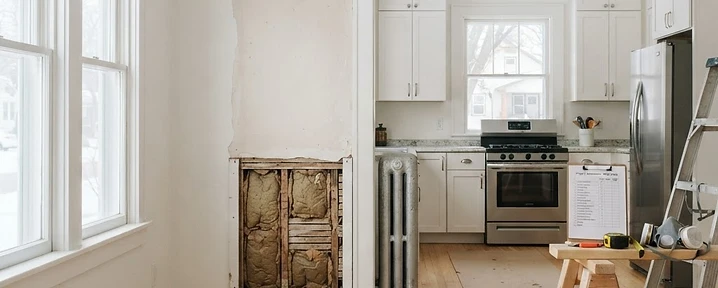
For residential real estate investors and house flippers across the Upper Midwest, aging properties represent prime opportunities for value-add renovations. However, working with historic or mid-century homes brings distinct environmental compliance responsibilities that directly affect timelines and balance sheets.
Recent regulatory movements highlight why hazard management must be prioritized upfront. The Minnesota Department of Health (MDH) initiated formal rulemaking (Revisor's ID: #4993) under Minnesota Rules, Chapter 4761, aligning state residential lead abatement regulations with the EPA’s stricter standards. Under these proposed changes, dust-lead hazard standards (DLHS) move to "any reportable level" for floors and window sills, while dust-lead clearance levels (DLCL) are being reduced significantly—down to 5 µg/ft² for floors, 40 µg/ft² for sills, and 100 µg/ft² for troughs. Concurrently, cities like Minneapolis are actively scaling municipal and residential lead paint abatement contracts, while the EPA continues regulatory reviews targeting legacy asbestos in building renovations.
For real estate professionals turning over older properties, these shifts mean post-renovation cleanup standards and environmental due diligence are tighter than ever. Here is what every flipper, landlord, and investor should keep in mind before swinging a hammer.
Understand Where Hazards Hide in Pre-1978 Housing
In markets like the Twin Cities, where more than 60% of homes were constructed prior to the 1978 federal ban on residential lead paint, encountering environmental hazards is common. During purchase inspections, visual appraisals rarely capture hidden liabilities:
- Lead-Based Paint: Typically found on window casings, sills, baseboards, doors, exterior siding, and porches. Routine scraping, sanding, or demolition can generate fine lead dust that settles into porous surfaces.
- Asbestos-Containing Materials (ACM): Often present in floor tiles and mastics, vermiculite attic insulation, pipe wrap, textured "popcorn" ceilings, and vintage siding. Disturbing non-friable materials can cause them to become friable, releasing microscopic fibers into breathing zones.
Pre-Acquisition Due Diligence Protects Margins
Discovering unexpected abatement scope mid-flip is one of the fastest ways to exhaust contingency budgets. Incorporating environmental testing early into your underwriting process prevents surprises:
- Schedule Pre-Renovation Testing: Standard home inspections do not typically include comprehensive sampling for lead or asbestos. Engaging licensed inspectors before finalizing purchase agreements or demolition plans clarifies project scopes.
- Review Historic Alterations: Older additions or structural retrofits often concealed hazardous materials beneath newer layers of drywall or flooring. Baseline testing identifies what lies behind newer surfaces.
- Factor In Abatement Realities: If testing confirms asbestos or lead hazards, obtain bids from state-licensed contractors to integrate proper containment, abatement, and clearance timelines into your holding cost projections.
Renovation Safety and the EPA RRP Rule
House flippers and renovation contractors must adhere to federal and state standards, including the EPA’s Renovation, Repair, and Painting (RRP) Rule. Recent federal enforcement actions highlight standard requirements:
- Containment: Work areas in target housing must use impermeable poly-sheeting barriers to isolate dust from non-work areas.
- Signage and Access: Renovation zones must post visible warning signage to limit entry.
- Waste Handling: Hazardous renovation waste must be sealed inside proper containment bags or enclosures for compliant transport and disposal.
- Recordkeeping: Maintain complete records of testing, containment, and waste manifests for at least three years, as these may be required during audit checks, municipal permitting reviews, or property sales disclosures.
Clean and Clear: Lower Clearance Thresholds
With clearance thresholds tightening, standard broom cleaning or basic shop-vac cleanup is insufficient. Once lead abatement or heavy paint disruption occurs, clearing a property for sale or tenant occupancy requires structured procedures:
- Use HEPA-filtered vacuuming followed by wet-wiping with specialized detergents, cleaning from high areas to low.
- Budget time for post-abatement dust wipe clearance testing conducted by certified, independent professionals before listing or opening the property to tenants.
Partnering for Compliant Projects
Navigating environmental compliance does not need to delay profitable deals. Operating with proper testing protocols and containment ensures investor teams preserve capital, protect future occupants, and pass municipal inspections smoothly.
Serving properties throughout Minnesota with an extensive presence across the Twin Cities metro, SAFE (Solutions for Asbestos Free Environments) assists real estate investors, property managers, and general contractors with certified asbestos and lead inspections, risk assessments, and safe abatement services. Incorporating verified environmental testing into your acquisition pipeline ensures project compliance from initial purchase through final sale.
We use Google AdSense to show ads on selected educational articles. Advertising cookies help us keep this content free. You can change this choice anytime.
Comments
(0)Join the conversation
Members can comment on articles. Create a free account to share your thoughts.
Create free accountNo comments yet. Be the first to share your thoughts.