
Minnesota’s Tightening Lead Rules: What General and Trade Contractors Must Know
Minnesota is overhauling lead regulations across residential abatement, RRP enforcement, and workplace safety standards. Here is how these shifting rules impact general and trade contractors on upcoming renovation jobs.
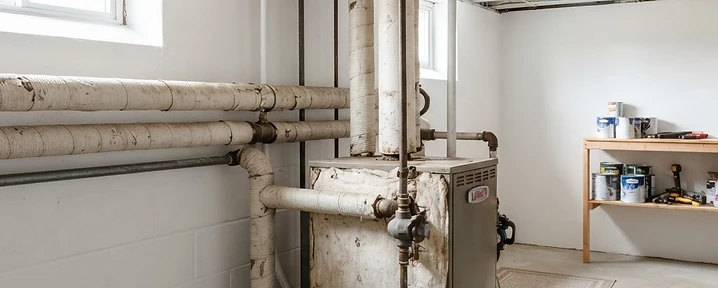
For general contractors and trade professionals working on older building stock across Minnesota, the regulatory environment surrounding lead paint and lead dust is shifting rapidly. With key actions underway from both the Minnesota Department of Health (MDH) and Minnesota OSHA (MNOSHA), staying on top of lead requirements is no longer just an administrative checkbox—it is central to jobsite safety, project timelines, and liability management.
Here is a clear breakdown of the recent regulatory developments in Minnesota and practical steps contractors should take before swinging a hammer.
Minnesota’s Push for Stricter Lead Standards
Recent agency actions demonstrate a state-level push toward tighter oversight of lead hazards:
1. MDH Residential Lead Abatement Rulemaking (Revisor ID #4993)
Following the U.S. Environmental Protection Agency’s (EPA) updated standards, the Minnesota Department of Health initiated formal rulemaking to amend Minnesota Rules, Chapter 4761. The proposed changes substantially lower the thresholds that define lead dust hazards and clearance:
- Dust-Lead Hazard Standards (DLHS): Proposing a shift from the previous 10 µg/ft² on floors and 100 µg/ft² on window sills down to any reportable level detected by an EPA-recognized laboratory.
- Dust-Lead Clearance Levels (DLCL): Dropping post-abatement pass thresholds from 10 µg/ft² to 5 µg/ft² for floors, from 100 µg/ft² to 40 µg/ft² for window sills, and from 400 µg/ft² to 100 µg/ft² for window troughs.
Achieving post-remediation clearance under these lower limits leaves zero room for poor containment or incomplete dust control.
2. State-Administered RRP Regulations
Under direction from the Minnesota Legislature, MDH has developed draft rules to assume direct administration and enforcement of the federal Renovation, Repair, and Paint (RRP) program (40 CFR Part 745 Subpart E). Currently enforced regionally by EPA Region 5, state authorization means MDH will oversee local RRP firm certifications, lead sampling protocols, pre-renovation education, and jobsite compliance for pre-1978 residential properties and child-occupied facilities.
3. MNOSHA Updates to Lead in Construction (1926.62)
Following legislative mandates, MNOSHA is conducting rulemaking to update occupational lead exposure standards. MNOSHA's draft rules for construction target lower blood lead level (BLL) thresholds for employee medical removal and emphasize stringent controls around "trigger tasks"—including manual demolition of drywall, scraping, power sanding, and torch work where lead coatings exceed trigger thresholds.
Practical Jobsite Guidance for Contractors
Whether preparing an estimate, submitting a bid, or coordinating trades on-site, adopting a structured hazard management approach ensures projects avoid costly stop-work orders or failed clearances.
1. Test Before You Disturb
Never rely on visual assumptions. In Minnesota, pre-1978 homes, historic duplexes, and older commercial spaces routinely contain lead-bearing coatings—sometimes buried beneath multiple layers of modern paint.
- Conduct professional sampling: Prior to demolition, order an XRF paint inspection or laboratory analysis by a certified risk assessor to identify exact lead locations.
- Screen for dual hazards: Many structures that contain lead-based paint also house asbestos-containing materials (ACM), such as pipe insulation, duct wrap, vinyl floor tiles, and plaster. Identify both hazards in a single, coordinated inspection before scheduling trades.
2. Upgrade Dust Containment Protocols
With clearance thresholds cut in half (or tighter), standard sweeping or shop vacuums are compliance liabilities. Dust migrates easily through HVAC systems and foot traffic.
- Establish positive physical barriers using 6-mil polyethylene sheeting.
- Seal all return air grilles and HVAC supply vents within the work zone.
- Use genuine HEPA vacuums designed and certified for hazardous dust capture.
- Implement sticky walk-off pads and staging airlocks for high-traffic entry points.
3. Review Subcontractor Credentials
General contractors bear reputational and regulatory exposure if trade partners track hazardous dust through occupied premises or disturb lead without certified protocols.
- Confirm that painting, drywall, mechanical, and demolition subcontractors maintain active RRP or abatement licensing where required.
- Ensure site supervisors understand MNOSHA trigger tasks and personal protective equipment (PPE) requirements, including proper respirator fit-testing and cartridge selection.
4. Build Detailed Clearance Into the Project Schedule
Stricter post-abatement numbers (5 µg/ft² on floors) mean passing clearance tests requires meticulous, wet-cleaning techniques followed by HEPA vacuuming. Allow buffer time in your construction milestone schedule for testing, lab turnaround, and secondary cleaning passes if necessary.
Collaborative Hazard Management
Navigating overlapping federal, state, and workplace safety requirements does not have to stall your job pipeline. Integrating certified testing and certified abatement into your pre-construction workflow protects both your crews and your clients.
At SAFE (Solutions for Asbestos Free Environments), we serve general contractors, trades, and property managers throughout Minnesota, with a dedicated presence across the Twin Cities metro. Our certified inspectors and abatement teams provide accurate site testing, clear reporting, and compliant remediation so your trades can work safely and stay on schedule.
We use Google AdSense to show ads on selected educational articles. Advertising cookies help us keep this content free. You can change this choice anytime.
Comments
(0)Join the conversation
Members can comment on articles. Create a free account to share your thoughts.
Create free accountNo comments yet. Be the first to share your thoughts.