
Minnesota Updates Lead Dust and RRP Standards: What Real Estate Investors and House Flippers Need to Know
With the EPA's stricter dust-lead standards taking effect and Minnesota advancing state-level RRP rulemaking, real estate investors and house flippers must plan ahead for tighter environmental compliance.
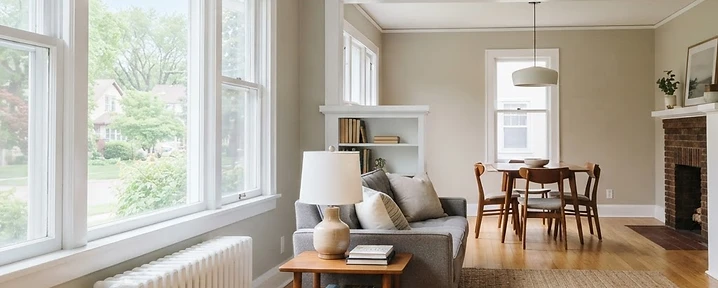
For residential property investors and flippers working with pre-1978 housing stock, environmental compliance is evolving quickly. Recent regulatory developments from both federal and state agencies are tightening lead standards across the board, fundamentally changing how older properties must be tested, renovated, and cleared after work is complete.
Following the U.S. Environmental Protection Agency’s (EPA) finalized dust-lead rule, the Minnesota Department of Health (MDH) Residential Lead Abatement Rulemaking is actively amending Minnesota Rules, Chapter 4761. In parallel, MDH is progressing toward taking over direct enforcement of the federal Renovation, Repair, and Painting (RRP) program within the state through Minnesota Lead RRP Rulemaking. For anyone buying, flipping, or managing older residential properties, these updates directly impact project budgets, construction workflows, and final clearance timelines.
What Is Changing: Tighter Thresholds for Dust-Lead and Abatement
Historically, the EPA and state health departments set specific numeric limits for determining lead-dust hazards and passing post-abatement clearance tests. Under the latest federal framework, which states administering authorized programs must reflect within two years:
- Dust-Lead Hazard Standards (DLHS): The benchmark defining a hazard on floors and window sills is shifting from fixed levels (previously 10 µg/ft² on floors and 100 µg/ft² on interior sills) to any reportable level verified by an EPA-recognized laboratory.
- Dust-Lead Clearance Levels (DLCL): The thresholds required to pass post-abatement wipe tests are tightening dramatically. Proposed rules lower floor clearance from 10 µg/ft² down to 5 µg/ft², window sills from 100 µg/ft² to 40 µg/ft², and window troughs from 400 µg/ft² to 100 µg/ft².
At the same time, MDH’s ongoing move to assume direct state administration of the federal RRP rule will bring oversight closer to home, establishing local state certification, training, and work-practice compliance for pre-1978 residential renovations.
Why Real Estate Investors and Flippers Must Pay Attention
When buying older duplexes, bungalows, or turn-of-the-century homes, speed and cost predictability are vital. Unplanned lead hazards can halt a project, complicate tenant transitions, or trigger administrative delays:
- Zero-Tolerance Clearance Realities: Lowering clearance levels to 5 µg/ft² on floors means traditional "broom-clean" turnover standards will not pass muster where regulated lead work is performed. Thorough HEPA vacuuming and specialized wet-cleaning protocols become non-negotiable.
- Subcontractor Accountability: If you hire general tradespeople who disturb painted surfaces in pre-1978 properties without RRP certification, the property owner can still face significant liability, project delays, or state scrutiny.
- Exit Strategy and Disclosure Protection: Whether you are reselling to a retail buyer or onboarding long-term tenants, federal and Minnesota laws require transparent lead disclosures. Documenting that work was verified or pre-screened safeguards your investment's marketability.
Practical Steps Before You Start Your Next Flip or Renovation
Rather than treating environmental hazards as an afterthought on demolition day, incorporate lead and asbestos diligence into your pre-acquisition and planning phases:
- Inspect Before You Demo: Conduct an initial lead risk assessment or targeted paint inspection before swing day. Knowing whether door casings, baseboards, or exterior soffits contain lead paint allows you to build accurate abatement or containment costs into your offer.
- Don’t Forget Asbestos: In homes old enough to have lead paint, asbestos is frequently present in floor tiles, duct wrap, drywall joint compound, vermiculite, or acoustic plaster. A comprehensive pre-renovation survey covers both hazards in one mobilization.
- Vet Your General Contractors: Verify that any general contractor or specialty trade disturbing more than minimal surface areas holds valid lead-safe credentials and understands local containment and disposal protocols.
- Budget for Post-Work Clearance: Build time into your schedule for dust wipe sampling and independent laboratory turnaround before opening the property to staging, open houses, or rental occupancy.
Professional Due Diligence Across Minnesota
Navigating shifting standards doesn’t have to derail your investment margins. Having a qualified, objective inspection and abatement partner ensures you identify hazards accurately and clear regulatory hurdles smoothly.
Based in Minnesota with an active presence throughout the Twin Cities metro, SAFE (Solutions for Asbestos Free Environments) provides comprehensive asbestos and lead inspection, risk assessment, and abatement solutions. Whether you are conducting due diligence on a prospective multi-family acquisition or finalizing clearance on a historic renovation, early consultation keeps your job sites compliant and your projects moving forward.
We use Google AdSense to show ads on selected educational articles. Advertising cookies help us keep this content free. You can change this choice anytime.
Comments
(0)Join the conversation
Members can comment on articles. Create a free account to share your thoughts.
Create free accountNo comments yet. Be the first to share your thoughts.