
Minnesota Updates Lead Dust Standards: What Environmental and Home Inspectors Need to Know
Following the EPA's lead dust rule revisions, the Minnesota Department of Health is initiating major rule amendments to Chapter 4761, significantly lowering clearance standards and hazard levels.
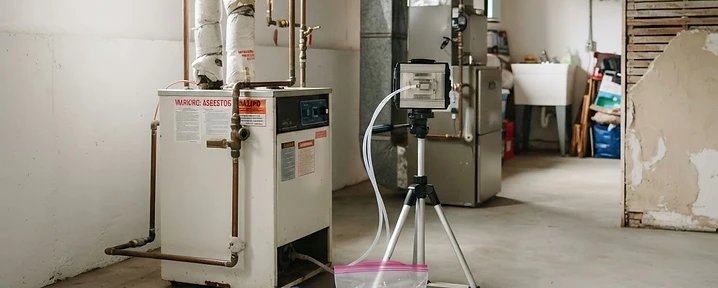
For home inspectors, environmental assessors, and risk assessors operating throughout Minnesota, regulatory shifts around lead paint and dust hazards are accelerating. The Minnesota Department of Health (MDH) has initiated rulemaking under Minnesota Rules, Chapter 4761 (Revisor's ID #4993) to update the state's residential lead abatement standards.
This administrative overhaul follows the U.S. Environmental Protection Agency's (EPA) final rule updating the Dust-Lead Hazard Standards (DLHS) and Dust-Lead Post-Abatement Clearance Levels (DLCL). Because Minnesota administers an EPA-authorized residential lead program, the state is required to align its rules with federal benchmarks within two years. For inspection professionals, understanding these numeric thresholds is crucial before performing pre-purchase evaluations, scoping abatement projects, or clearing tenant turnover remediations.
The New Benchmarks: From 10 µg/ft² to Laboratory Detection
The rulemaking directly shifts the goalposts for lead dust assessment and post-abatement verification:
- Dust-Lead Hazard Standards (DLHS): MDH is amending the hazard standard for floors and window sills from the previous 10 µg/ft² (floors) and 100 µg/ft² (sills) to “any reportable level by an EPA-recognized laboratory.” This fundamentally shifts the standard from an arbitrary ceiling to analytical detection, meaning any reportable trace of lead dust on these surfaces will be categorized as a hazard.
- Dust-Lead Clearance Levels (DLCL): Clearance levels determine when abatement or cleanup work is deemed safe and complete. MDH is lowering these levels to match federal mandates:
- Floors: Lowered from 10 µg/ft² to 5 µg/ft²
- Interior Window Sills: Lowered from 100 µg/ft² to 40 µg/ft²
- Window Troughs (Wells): Lowered from 400 µg/ft² to 100 µg/ft²
These adjustments reflect toxicological data demonstrating that no safe blood lead level exists for young children. Concurrently, MDH is progressing toward formal state administration of the federal Renovation, Repair, and Paint (RRP) Rule, tightening certified contractor requirements across pre-1978 residential properties and child-occupied facilities.
Practical Guidance for Inspectors Before Project Kickoff
Lower clearance thresholds and stricter hazard definitions require field inspectors to refine their procedures. Whether conducting a routine home inspection or overseeing environmental clearance, adopt these practical controls:
1. Verify Laboratory Reporting Limits
Under the "any reportable level" rule, your laboratory's Minimum Detection Limit (MDL) and Reporting Limit (RL) directly affect whether a property passes or fails an evaluation. Confirm that your accredited environmental testing laboratory can achieve quantitation limits well below the new clearance thresholds—particularly the 5 µg/ft² floor standard.
2. Guard Against Field Cross-Contamination
Achieving clearance at 5 µg/ft² leaves negligible margin for sampling error:
- Always change gloves between every wipe sample.
- Avoid reusable measuring templates unless thoroughly decontaminated between sampling locations; consider single-use disposable templates.
- Document any background contamination or nearby active renovations that could compromise dust sample integrity.
3. Educate Buyers and Property Managers Objectively
Inspectors frequently interface with buyers, sellers, and property managers navigating pre-1978 properties. Communicate findings using neutral, factual framing:
- Clarify that historical dust thresholds have been lowered across both federal and state levels to improve long-term health protections.
- Emphasize the distinction between intact paint, friction surfaces (such as double-hung windows), and settled dust.
- Avoid guaranteed outcomes or blanket reassurances regarding older finishes without lab verification.
4. Know When Abatement or Specialized Containment Is Triggered
If wipe samples exceed reportable hazard thresholds or if planned renovation will disturb paint in older structures, point clients to certified contractors who understand local Chapter 4761 protocols and containment standards.
Safe Collaboration Across Minnesota
Navigating shifting environmental standards requires consistent communication between field inspectors, sampling technicians, and abatement professionals. Solutions for Asbestos Free Environments (SAFE) serves residential, commercial, and institutional clients across Minnesota, maintaining a strong operational presence throughout the Twin Cities metro.
As MDH continues through the Chapter 4761 rulemaking process, staying aligned with both state-level draft updates and federal guidelines ensures your clients receive accurate data, defensible reports, and safe environments.
We use Google AdSense to show ads on selected educational articles. Advertising cookies help us keep this content free. You can change this choice anytime.
Comments
(0)Join the conversation
Members can comment on articles. Create a free account to share your thoughts.
Create free accountNo comments yet. Be the first to share your thoughts.