
Minnesota Updates Residential Lead Abatement Rules: What Home and Environmental Inspectors Need to Know
Following the EPA's stricter dust-lead hazard and clearance standards, the Minnesota Department of Health is initiating updates to Chapter 4761 that will reshape inspection thresholds and post-abatement clearance.
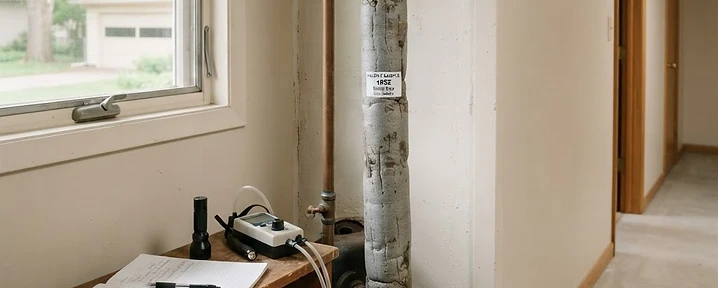
Regulatory benchmarks for residential lead hazards are undergoing a major shift across the country, and Minnesota is actively moving forward with formal rulemaking to match federal standards. According to the Minnesota Department of Health (MDH), the state has initiated rulemaking (Revisor's ID #4993) to update Minnesota Rules, Chapter 4761, which governs residential lead abatement.
This update follows the Environmental Protection Agency's (EPA) final rule lowering dust-lead hazard standards (DLHS) and dust-lead post-abatement clearance levels (DLCL). Because Minnesota administers an EPA-funded residential lead abatement program, the state must update its administrative rules to align with these federal benchmarks. For home inspectors, environmental sampling technicians, risk assessors, and contractors, these changes will significantly alter how lead dust is identified, evaluated, and cleared after renovation or abatement.
Key Changes in the Minnesota Rulemaking
Historically, inspectors and contractors measured clearance against defined numerical caps established in prior rule revisions (such as 10 µg/ft² on floors and 100 µg/ft² on interior window sills). The new proposed rulemaking sets much more stringent goals:
- Hazard Identification (DLHS): Updating the floor and window sill dust-lead hazard thresholds to any reportable level detected by an EPA-recognized laboratory, reflecting current scientific consensus that there is no safe level of lead exposure for children.
- Clearance Levels (DLCL): Significantly reducing the permissible residual lead levels required to pass post-abatement clearance:
- Floors: Lowering from 10 µg/ft² to 5 µg/ft².
- Window Sills: Lowering from 100 µg/ft² to 40 µg/ft².
- Window Troughs: Lowering from 400 µg/ft² to 100 µg/ft².
- Standard References & Definitions: Updating references to American Society for Testing and Materials (ASTM) protocols and conforming administrative definitions for "abatement" and "affected property."
Additionally, MDH continues its parallel rulemaking process to assume state authorization over the federal Renovation, Repair, and Painting (RRP) program, signaling heightened regulatory scrutiny across pre-1978 residential housing stock.
Practical Guidance for Inspectors Before Project Kickoff
Whether assessing a single-family home before purchase, consulting on a pre-renovation review, or conducting environmental risk assessments during tenant turnover, inspectors play a vital role in client safety and compliance. Here is how inspectors can prepare clients and project teams:
1. Re-Evaluate Laboratory Capabilities and Reporting Limits
With hazard standards shifting toward "any reportable level," verify that your accredited laboratory partners are using analytical methods with low detection limits. Ensure your laboratory reports clearly specify their method detection limit (MDL) and reporting limit (RL) so your field reports withstand regulatory review.
2. Prepare Clients for Stricter Post-Abatement Clearance
Lowering clearance thresholds by half—or more—means standard cleanup protocols may no longer pass post-work wipe testing on the first try. Advise property owners and general contractors to anticipate:
- Rigorous multi-stage HEPA vacuuming and wet-cleaning cycles.
- Sufficient dry time and clean-room containment integrity to avoid cross-contamination before sampling.
- Budgeting adequate project time for re-cleaning if initial clearance wipes do not meet the 5 µg/ft² floor standard.
3. Check Renovation Histories on Pre-1978 Properties
During pre-purchase or tenant turnover inspections, note uncontained paint disturbances, aging double-hung window troughs, and historic trim. Remind clients that non-certified paint scraping or window replacement in older homes creates fine lead dust that settles deeply into flooring seams and HVAC systems.
4. Cross-Reference Water Service Line Status
Lead risk is not limited to paint chips and dust. Minnesota water utilities recently completed statewide service line inventories under MDH oversight. When performing comprehensive environmental evaluations, inspectors can check municipal service line records to verify whether the incoming utility pipe or private side contains historic lead piping.
Collaborating on Complex Environmental Hazards
Managing environmental hazards requires precision, proper chain-of-custody documentation, and clear communication with property owners. When inspection reports identify deteriorated lead paint or suspected asbestos-containing insulation and flooring, partnering with licensed abatement professionals ensures that risk reduction is handled safely and in accordance with current state and federal regulations.
At SAFE (Solutions for Asbestos Free Environments), we provide professional asbestos and lead inspection, testing, and abatement services across Minnesota, with a strong presence in the Twin Cities metro. By staying aligned with evolving regulatory benchmarks from MDH and the EPA, inspectors and environmental specialists can deliver confident, accurate guidance to property owners throughout Minnesota.
We use Google AdSense to show ads on selected educational articles. Advertising cookies help us keep this content free. You can change this choice anytime.
Comments
(0)Join the conversation
Members can comment on articles. Create a free account to share your thoughts.
Create free accountNo comments yet. Be the first to share your thoughts.