
Tighter EPA Dust-Lead Standards: What Minnesota Landlords and Property Managers Must Know
With the EPA's stricter Dust-Lead Action Levels and new reportable standards taking hold, Minnesota property managers must navigate updated clearance metrics and compliance rules during turns and renovations.
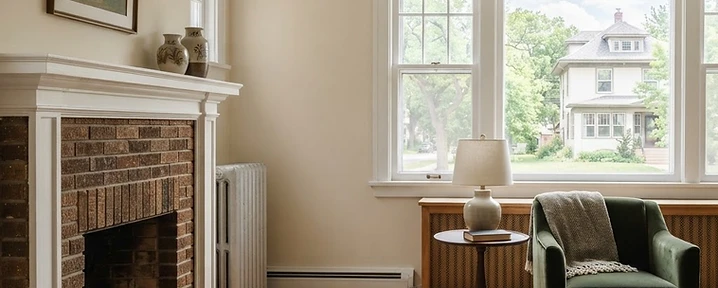
Property managers and residential rental owners are navigating a significant shift in federal environmental standards. Under the U.S. Environmental Protection Agency’s (EPA) final rule regarding dust-lead hazards, the federal government has substantially tightened both how lead hazards are defined and how clean a property must be following lead abatement.
For rental housing built before 1978, these regulatory adjustments directly influence turnover protocols, maintenance planning, capital improvement projects, and mandatory tenant disclosures.
The New Regulatory Landscape: DLRL and DLAL
Historically, the EPA maintained numeric thresholds for both dust-lead hazards and post-abatement clearance. The updated framework decouples these two metrics into distinct categories:
- Dust-Lead Reportable Levels (DLRL): Formerly known as the dust-lead hazard standard, this has moved from fixed numeric limits (previously 10 µg/ft² for floors and 100 µg/ft² for window sills) to any reportable level detected by an accredited laboratory under the National Lead Laboratory Accreditation Program (NLLAP). In practical terms, any lab-detectable lead in dust is recognized as a hazard.
- Dust-Lead Action Levels (DLAL): Replacing the previous post-abatement clearance levels, DLAL establishes the benchmark a work area must achieve before an abatement project can be signed off as complete. These standards were reduced by over 50% across key surfaces:
- Floors: Lowered from 10 µg/ft² to 5 µg/ft²
- Interior Window Sills: Lowered from 100 µg/ft² to 40 µg/ft²
- Window Troughs: Lowered from 400 µg/ft² to 100 µg/ft²
While state programs authorized to administer EPA regulations—including ongoing rule alignments under the Minnesota Department of Health (MDH)—have a phased timeline to adopt equivalent or stricter standards, these federal action levels set the scientific and operational benchmark for rental safety nationwide.
Practical Steps Before Launching Your Next Turnover or Renovation
With clearance thresholds cut in half, older standard cleaning practices are no longer sufficient to guarantee passing results. Property managers overseeing pre-1978 stock in Minneapolis, Saint Paul, and greater Minnesota should implement structured workflows before, during, and after unit turnover.
1. Differentiate Lead Renovations from Lead Abatement
The EPA's Renovation, Repair, and Painting (RRP) Rule applies to routine maintenance, turnover repairs, or general contracting work that disturbs painted surfaces in pre-1978 properties. Abatement, conversely, is work specifically intended to permanently eliminate lead hazards. Knowing the regulatory scope of your project determines whether an EPA-certified RRP contractor is required or whether work requires certified lead abatement contractors and formal clearance testing.
2. Update Lease Disclosure Packages
Under the federal Residential Lead-Based Paint Hazard Reduction Act, housing providers must disclose known lead-based paint and lead-based paint hazards before entering into a lease. Because the EPA now classifies any reportable lab result as a dust-lead hazard, environmental records or clearance reports in your property files must be carefully cross-referenced. Historical records cannot simply be dismissed under outdated clearance thresholds; maintain clear, organized environmental audit trails for every unit.
3. Enhance Containment and Cleaning Protocols
Meeting a floor threshold of 5 µg/ft² demands meticulous dust control. If maintenance staff or contractors perform work disturbing lead paint surfaces:
- Ensure plastic sheeting containment is airtight to prevent fine particulates from drifting into HVAC returns or adjacent living areas.
- Avoid dry sweeping or standard shop vacuums, which disperse microscopic lead dust into the air.
- Mandate specialized multi-pass cleaning: HEPA vacuuming followed by wet cleaning with an all-purpose detergent or lead-specific wash, finished with another round of HEPA vacuuming.
4. Schedule Independent Clearance Testing
Never assume visual inspection alone confirms a space is ready for re-occupancy. Engaging an independent certified lead inspector or risk assessor to conduct dust wipe sampling confirms your units meet contemporary clearance standards before new residents move in. Independent documentation provides objective verification of property conditions and reduces operational uncertainty.
Managing Older Properties with Confidence
Historic multi-family buildings, duplexes, and single-family rentals make up a substantial portion of the Twin Cities and broader regional housing inventory. Meeting today's stringent dust-lead thresholds requires proactive inspection and certified testing methodologies.
At SAFE (Solutions for Asbestos Free Environments), we provide comprehensive lead inspections, risk assessments, and clearance testing designed to keep property owners informed and compliant. Serving Minnesota with a strong Twin Cities presence, our licensed team assists property managers and landlords in making data-driven decisions that safeguard building occupants and protect long-term investments.
We use Google AdSense to show ads on selected educational articles. Advertising cookies help us keep this content free. You can change this choice anytime.
Comments
(0)Join the conversation
Members can comment on articles. Create a free account to share your thoughts.
Create free accountNo comments yet. Be the first to share your thoughts.