
What Homeowners Need to Know About Minnesota's Evolving Lead Standards and Asbestos Rules Before Renovating
With the EPA tightening residential dust-lead standards and Minnesota agencies stepping up local enforcement, here is what homeowners need to know before taking a sledgehammer to their next project.
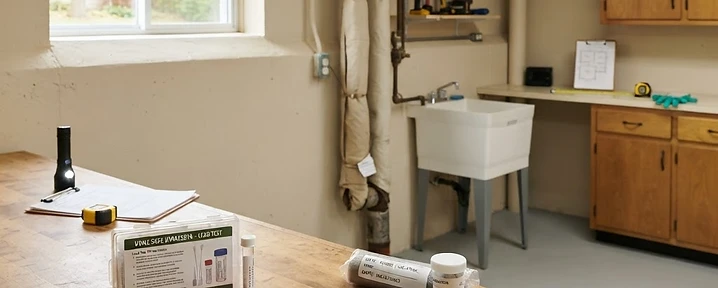
Planning a kitchen remodel, finishing a basement, or replacing old windows is an exciting milestone for any homeowner. However, if your home was built before the late 1970s, demolition dust is more than just an aesthetic mess—it can present genuine health hazards if it carries lead or asbestos fibers.
Two major developments in Minnesota highlight why regulatory agencies are treating hazardous materials in residential settings with increased scrutiny, and why homeowners should take careful, proactive steps before beginning any tear-out.
Shifting Rules: EPA and Minnesota Department of Health Lead Updates
Following the U.S. Environmental Protection Agency's (EPA) updated final rule revising dust-lead standards, state health departments are adjusting their oversight. In Minnesota, the Minnesota Department of Health (MDH) initiated formal rulemaking under Chapter 4761 to align state residential lead abatement rules with the stricter federal levels.
Under these updated frameworks, the federal Dust-Lead Hazard Standard (DLHS) has shifted toward any reportable level detected by an EPA-recognized laboratory, and post-abatement clearance levels have dropped considerably—tightening down to 5 µg/ft² on floors and 40 µg/ft² on window sills. Simultaneously, MDH has been conducting rulemaking sessions to assume direct state administration of the EPA's Renovation, Repair, and Paint (RRP) program.
These tighter dust-clearance standards reflect clear scientific consensus: even very low levels of lead dust generated during routine cutting, sanding, and demolition can linger on household surfaces, creating risks primarily for infants and young children.
Asbestos Enforcement: A Real-World Twin Cities Reminder
Lead is only half the equation in older properties; asbestos remains equally relevant. A recent enforcement action by the Minnesota Pollution Control Agency (MPCA) illustrates the strict compliance expected on local projects. The MPCA penalized a contractor nearly $18,000 for failing to submit required 10-day advance notifications prior to demolishing an asbestos-containing structure in Mahtomedi, lacking a trained monitor on-site, and failing to dispose of asbestos debris at a permitted facility.
While homeowners themselves are not always subject to the exact same commercial disposal mandates, the MPCA's enforcement highlights a critical principle: when building materials containing asbestos are disturbed without containment or proper handling, invisible fibers spread quickly into living spaces and the surrounding environment.
Where Lead and Asbestos Hide in Typical Minnesota Homes
Many classic Twin Cities neighborhoods—from South Minneapolis bungalows to Saint Paul Victorians and post-war suburban ramblers—contain legacy building materials:
- Lead Paint (Common in pre-1978 homes): Frequently found on high-friction surfaces like original double-hung window sashes, doors, trim, baseboards, and exterior siding.
- Asbestos-Containing Materials (Pre-1980s homes): Found in duct insulation ("paper wrap"), pipe elbow insulation, vermiculite attic insulation, plaster basecoats, vinyl floor tiles (frequently 9x9-inch tiles) and their adhesive mastics, and textured ceiling coatings.
These materials do not pose a hazard simply by existing; if they remain intact, undisturbed, and in good condition, they generally do not release particles into the air. The risk occurs when remodeling work involves sawing, sanding, scraping, or tearing down walls without prior containment.
Practical Steps to Take Before You Renovate
Before you swing a hammer or permit a contractor to start demolition, follow these practical steps to protect your household and project timeline:
1. Test Before You Disturb
Do not guess whether a material contains lead or asbestos based on age or appearance alone. Hire a certified inspector to conduct targeted testing:
- For lead: Professional testing using X-ray fluorescence (XRF) analyzers or certified lab paint chips provides definitive results without relying on inaccurate over-the-counter swabs.
- For asbestos: Certified inspectors take bulk samples using wet methods to prevent fiber release and send them to accredited laboratories for Polarized Light Microscopy (PLM) analysis.
2. Verify Contractor Credentials
If your home was built before 1978 and you are hiring out work that disturbs painted surfaces, ensure the contractor is EPA Lead-Safe Certified (or MDH certified under state programs). Ask to see their firm certification and lead renovator credentials before work begins.
3. Establish Containment and Air Control
If hazardous materials must be disturbed:
- Seal off work zones with durable plastic sheeting (polyethylene barriers) and seal HVAC return ducts so dust does not circulate through your furnace or AC.
- Use HEPA-filtered negative air machines and HEPA vacuums. Standard shop vacuums lack the filtration needed for microscopic lead dust and asbestos fibers and will blow them directly back into the room.
- Use wet-scraping and misting techniques to suppress airborne dust at the source.
4. Require Proper Clearance Testing
Once work is complete, ensure thorough cleanup using wet-wiping and HEPA vacuuming. Clearance wipe sampling confirms that lead dust levels fall beneath today's stricter thresholds before children or pets return to the living space.
Safe Solutions for Your Home
Navigating environmental rules and protecting your family does not have to derail your renovation timeline. At SAFE (Solutions for Asbestos Free Environments), we provide unbiased, certified inspection, testing, and abatement services across Minnesota, with a strong presence throughout the Twin Cities metro area.
Whether you need a pre-renovation survey, verification testing, or compliant abatement, taking measured, informed precautions ensures your home improvement project stays on track and safe for years to come.
We use Google AdSense to show ads on selected educational articles. Advertising cookies help us keep this content free. You can change this choice anytime.
Comments
(0)Join the conversation
Members can comment on articles. Create a free account to share your thoughts.
Create free accountNo comments yet. Be the first to share your thoughts.